.jpg)
The Case for Floating-Rate Loans

The Case for Floating-Rate Loans
With yields and inflation elevated and the Fed raising rates, income investors face a challenging backdrop. We highlight five reasons floating-rate loans may warrant consideration, including their income potential and low interest-rate sensitivity.
We believe credit offers some of the best opportunities in fixed income. The Little Book of Credit explains why.

Request Print Edition
Bond yields have climbed, inflation remains elevated, and the Federal Reserve has resumed raising short-term interest rates. Investors seeking income face considerable uncertainty in this evolving environment.
We see a strong case for floating-rate loans for their income potential, low sensitivity to interest rate changes, and historical performance. We share key details on five reasons to consider an allocation to the asset class.
1.) Potentially Attractive Yield with Limited Duration
We believe floating-rate loans can offer attractive starting yields with limited interest-rate sensitivity. Their coupons adjust with short-term rates, while their senior secured position places them ahead of unsecured debt in a borrower’s capital structure. With the 10-year Treasury recently rising above 5%, its highest level since 2007, reduced sensitivity to rising rates can be particularly valuable within a diversified fixed income portfolio.
2.) Inflation Hedge Potential and Rate-Enviroment Flexibility
Because loan coupons reset regularly off the Secured Overnight Financing Rate (SOFR), their income adjusts upward when rates rise and typically only declines gradually when rates fall.
Over the trailing three-year period, the loan asset class has shown positive correlations with monthly CPI change (+0.25 correlation), year-over- year CPI (+0.36), and CPI surprise versus consensus (+0.44). We believe the positive correlations indicate that when inflation came in hotter than consensus expected, loan returns benefited meaningfully. This is the inflation-hedge mechanism working as designed: surprise inflation results in expectations of tighter/sustained policy, then SOFR stays elevated and loan coupons reset higher, resulting in positive returns. In addition, the +0.36 correlation with year-over-year CPI in this window was notably stronger than the long-run +0.26, suggesting the relationship strengthens when inflation is more persistent.
We believe if rates move higher from here, loan coupons would reset upward while traditional fixed-rate assets would likely face greater price pressure.
3.) Historically Robust Performance Track Record
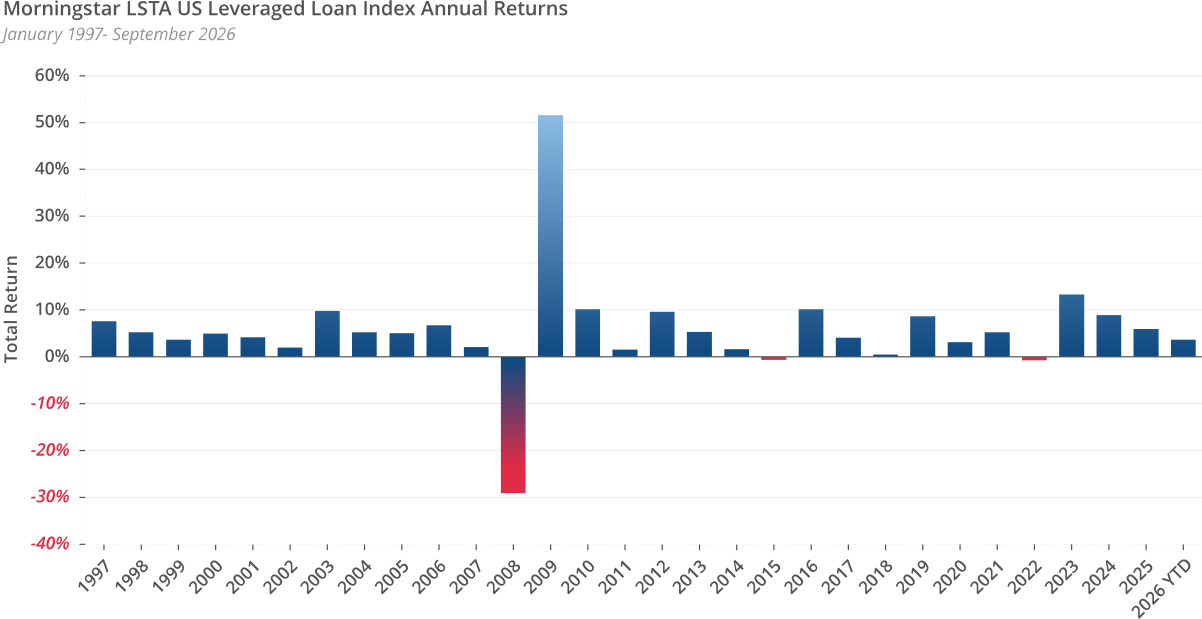
The Morningstar LSTA US Leveraged Loan Index delivered positive calendar-year returns in 26 of the 29 years from 1997 through 2025 and was up 3.29% YTD through September 2026. The only deeply negative year was 2008, when the index declined 29.1% amid the great financial crisis that sent turmoil across asset classes, and that episode was followed by a 51.6% recovery in 2009.
The more recent performance run since 2023 has been particularly strong, with increases of 13.32% in 2023, 8.95% in 2024, and 5.90% in 2025. Since 1997, the index has delivered a 5.71% average calendar-year total return and generated a 5.12% annualized total return. We believe this historical level of return across nearly three decades is rare in credit markets and reflects the asset class’s attractive combination of potential income generation and structural seniority.
Positive Returns Dominated Over Nearly Three Decades
4.) Past Resilience During Duration-Led Bond Selloffs
Loans have also demonstrated resilience during periods when rising rates pressured traditional fixed-rate bonds. Since April 2021, the Bloomberg US Aggregate Bond Index posted 31 negative monthly returns compared with just 13 for the Morningstar LSTA US Leveraged Loan Index. During the Agg’s down months, the Agg averaged a -1.47% return while loans averaged +0.48% in those same months.
5.) Loans Have Historically Outperformed HY Bonds During Hiking Cycles
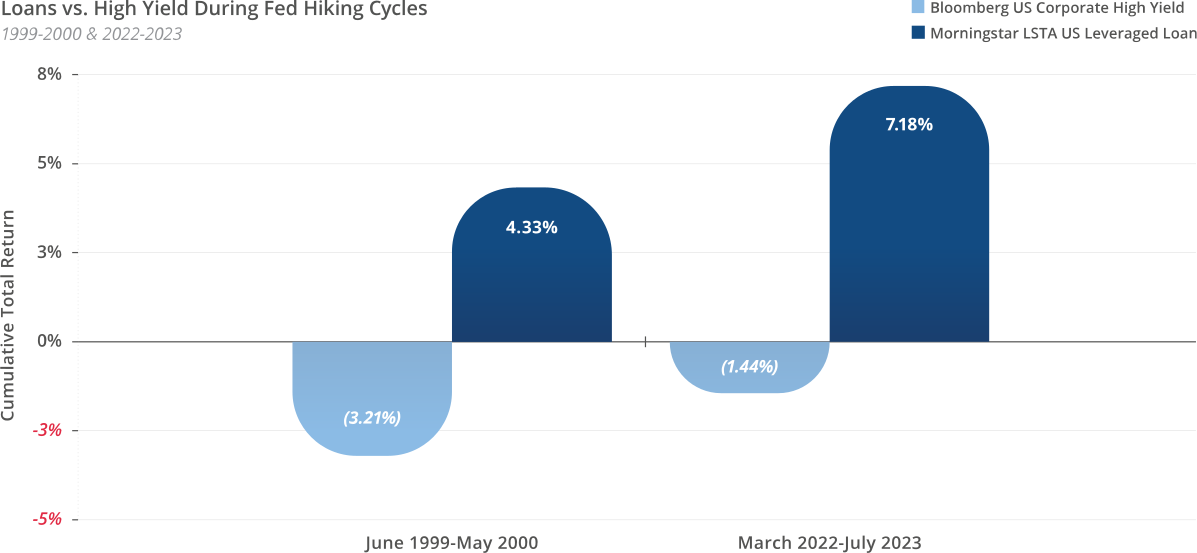
Leveraged loans have historically outperformed high yield bonds during the Fed hiking cycles as analyzed, as their floating-rate structure reduced the negative impact of rising base rates. The margin of outperformance was widest during the aggressive 2022-2023 hiking cycle and narrowest during the more gradual 1999-2000 cycle.
Historically, Loan Returns Were Positive and HY Returns Were Negative in Hiking Cycles
Past performance is not indicative of future results. The opinions expressed are not intended as an offer or solicitation with respect to the purchase or sale of any security. This material has been distributed for informational purposes only without regard to any particular user’s investment objectives, financial situation, or means and should not be considered as investment advice. Past performance is not indicative of future results. The information provided herein should not be construed as providing any assurance or guarantee as to returns that may be realized in the future from investments in any asset or asset class described herein. The information presented in this material has been developed internally and/or obtained from sources believed to be reliable; however Aristotle Pacific Capital does not guarantee the accuracy, adequacy, or the completeness of such information. Bank loans involve risk of default on interest and principal payments or price changes due to changes in credit quality of the borrower. This material contains forward-looking statements that speak only as of the date they are made, Aristotle Pacific Capital assumes no duty to and does not undertake to update forward-looking statements.